At the New Leaf Foundation, one of our core missions is to foster environmental awareness, especially through experiential learning. Hands-on activities have proven to be particularly effective for children with special needs, and our environmental education program begins with a simple yet powerful process: composting.
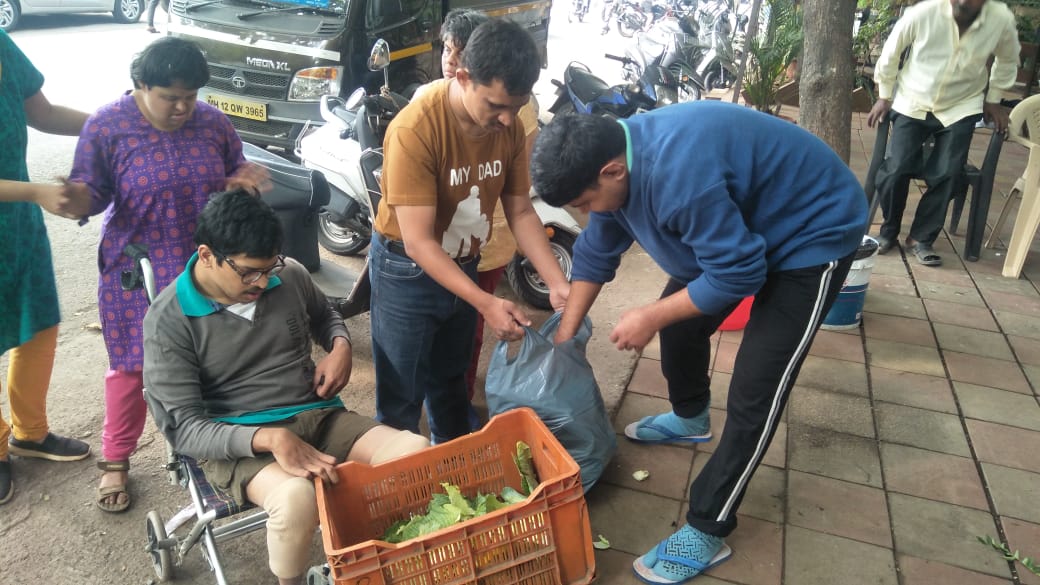
Students start by observing how dry and wet waste is separated at the centre. Teachers guide them in understanding the purpose behind this segregation. The students are then organized into three teams, each led by a peer leader. Their assignment is to collect biodegradable waste from home and bring it to the centre.
Once the waste is brought in, the teams sort it carefully and follow the standard procedure for layering it in the compost pit. They also learn how to use cow dung to aid the composting process. After some time, the compost matures and the students take part in harvesting and packing it into bags. This organic fertilizer is currently used in our kitchen garden and is also made available to families on request. Plans are underway to begin selling the compost in the near future.
This entire process is known as "Mission Black Gold." As students see their compost nourish blooming plants and thriving vegetables, they begin to understand why organic compost is often referred to as “black gold.”
In addition to composting, students engage in other eco-friendly activities that promote sustainable living. These include making paper bags, red dot bags for the safe disposal of sanitary napkins, painting reusable cloth bags, and crafting utility boxes from old sarees. Throughout these activities, teachers emphasize how each effort contributes to environmental protection and conservation.